Taxes, Earned Income Tax Credit, South Florida Families
The Earned Income Tax Credit: Are South Florida Families Leaving Money on the Table?
For many working families in Miami-Dade, Broward, and Palm Beach, the Earned Income Tax Credit (EITC) can mean the difference between catching up and falling behind. Yet every year, thousands of eligible families in South Florida never claim it—leaving hundreds or even thousands of dollars unclaimed with the IRS.
Custom HTML/CSS/JAVASCRIPT
What Is the Earned Income Tax Credit and Why It Matters in South Florida
The Earned Income Tax Credit is a refundable federal tax credit designed for low- to moderate-income workers. “Refundable” means that if your credit is larger than the income tax you owe, the IRS sends you the difference as a refund. For families facing high housing, childcare, and transportation costs in our region, this is real money back in your pocket, not just a smaller tax bill.
Yet despite the high cost of living, many who qualify for the earned income tax credit Florida never claim it. Some assume they earn too much, others think they do not qualify because they do not owe tax, and many are simply unaware the credit exists. If you work—whether for an employer or yourself—it is worth checking your EITC eligibility 2025.
EITC Eligibility Requirements for 2025: Do You Qualify?
To claim the EITC for the 2025 tax year (filed in 2026), you must meet several basic rules, according to the IRS (Publication 596 and EITC guidelines on irs.gov):
You must have earned income from wages, self-employment, tips, or similar work.
Your Adjusted Gross Income (AGI) must be below the limits for your filing status and number of qualifying children.
Your investment income must be $11,950 or less for 2025.
You, your spouse (if filing jointly), and each qualifying child must have a valid Social Security number by the due date of your return.
You must be a U.S. citizen or resident alien for the entire year and cannot file Form 2555 for foreign earned income.
If you do not have a qualifying child, you must also be between ages 25 and 64, live in the U.S. for more than half the year, and not be claimed as someone else’s dependent. For parents, your children must meet specific relationship, age, and residency tests to count as qualifying children.
2025 Income Limits and Maximum Credit Amounts
For tax year 2025, both your earned income and AGI must be under certain limits to receive the EITC South Florida families rely on. Here are the key numbers from the IRS for 2025:
No qualifying children: Max credit $649. Income must be below $19,104 (single, head of household, or similar) or $26,214 (married filing jointly).
One qualifying child: Max credit $4,328. Income must be below $50,434 (single/HOH) or $57,554 (married filing jointly).
Two qualifying children: Max credit $7,152. Income must be below $57,310 (single/HOH) or $64,430 (married filing jointly).
Three or more qualifying children: Max credit $8,046. Income must be below $61,555 (single/HOH) or $68,675 (married filing jointly).
The credit “phases in” as your income rises, reaches the maximum, and then slowly “phases out” as you approach the upper income limit. Even if your income is near the top of these ranges, you may still qualify for a smaller—but still valuable—credit.

Many eligible South Florida couples qualify for thousands in EITC refunds each year.
How to Claim the EITC Correctly on Your 2025 Tax Return
Claiming the EITC is done on your federal income tax return—usually Form 1040. If you have qualifying children, you will also complete the EIC schedule to list their information. To claim it correctly:
Gather accurate income documents such as W‑2s, 1099s, and records of self-employment income or tips.
Confirm Social Security numbers for you, your spouse, and each qualifying child exactly as they appear on Social Security cards.
Use IRS EITC tools or a trusted tax professional to verify eligibility and calculate your credit. IRS Publication 596 includes worksheets that walk you through the process.
File a return even if you are not required to file. Many working families with lower income do not have to file a tax return—but you must file to receive the EITC.
Common Mistakes That Disqualify Families from the EITC
The IRS reports that many EITC errors come from a few common issues. These mistakes can delay your refund or cause the credit to be denied:
Misreporting a child’s residency or relationship. A child must live with you in the U.S. for more than half the year and meet specific relationship rules (son, daughter, stepchild, foster child, sibling, etc.).
Using the wrong filing status. For example, filing as “married filing separately” generally disqualifies you from the credit, even if your income is low enough.
Incorrect Social Security numbers or names. Typos or mismatches with Social Security records can cause the IRS to reject your EITC claim.
Overlooking self-employment income or cash work. All earned income must be reported accurately. Underreporting can lead to penalties; overreporting can push you over income limits.
Don’t Leave Money on the Table: Get Help with Your EITC
In a high-cost area like South Florida, the tax credit working families receive from the EITC can help cover rent increases, school supplies, or a cushion for emergencies. Yet each year, millions of dollars in potential refunds go unclaimed because families do not realize they qualify or are nervous about making a mistake on their return.
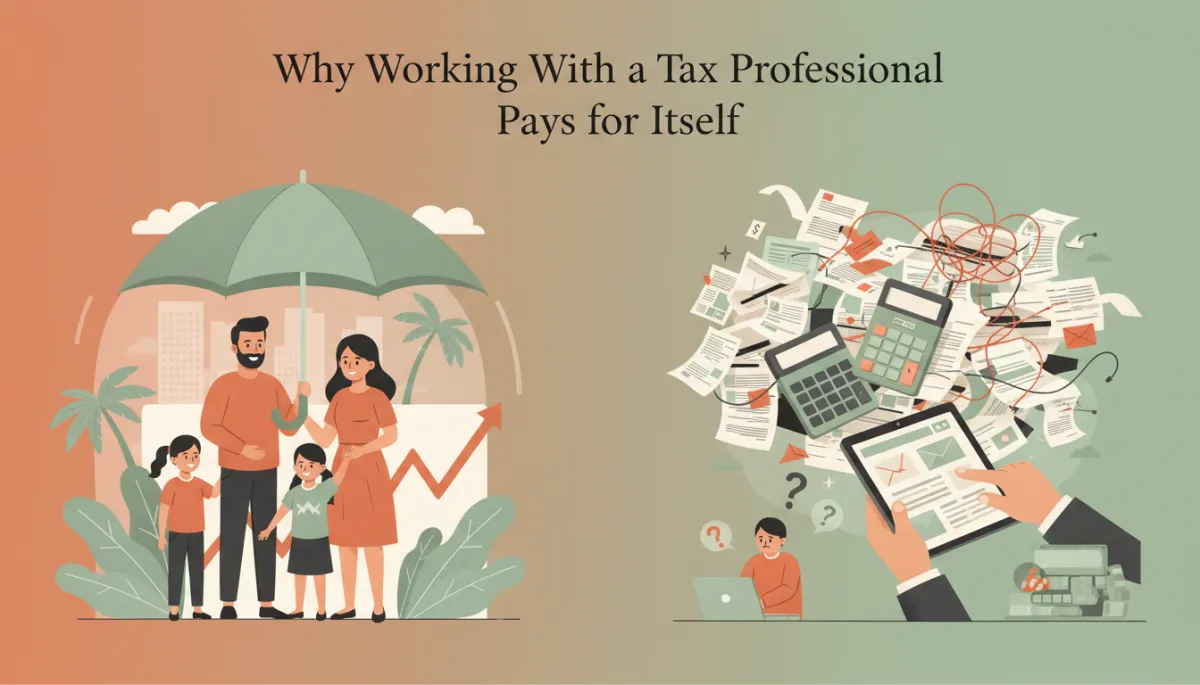
You do not have to figure this out alone. If you are unsure about your EITC eligibility 2025, or want to be confident you are getting every dollar you have earned, consider working with a knowledgeable tax professional who understands the unique challenges South Florida families face.
Ready to see whether you qualify for the earned income tax credit Florida families depend on? Schedule a conversation today so you do not leave money on the table this tax season. Book your appointment here: https://vffamilyenterprise.com/widget/booking/vf-bookschedule.
Related Articles
 Vivian Coleman Published on: 17/08/2026


