Taxes, Self-Employment, South Florida
How to Track Tax Deductions as a Self-Employed Worker in South Florida
If you are a freelancer, contractor, or self-employed professional in South Florida, every legitimate business receipt is an opportunity to lower your tax bill. The challenge is not just knowing what you can deduct — it is capturing and organizing those expenses all year long so you are not scrambling in March and April or leaving money on the table.
At VF Family Tax Services in North Lauderdale, Vivian Coleman, MSN, works with self-employed clients across Miami-Dade, Broward, and Palm Beach counties who are often surprised by how much they could have saved with better tracking. With a few simple systems, you can turn your everyday spending into real, defensible tax savings.
Custom HTML/CSS/JAVASCRIPT
📌 Key Idea: You are taxed on your net profit, not your gross income. Every eligible expense you track and document reduces that profit — and your tax bill.
Why Every Receipt Matters When You Are Self-Employed
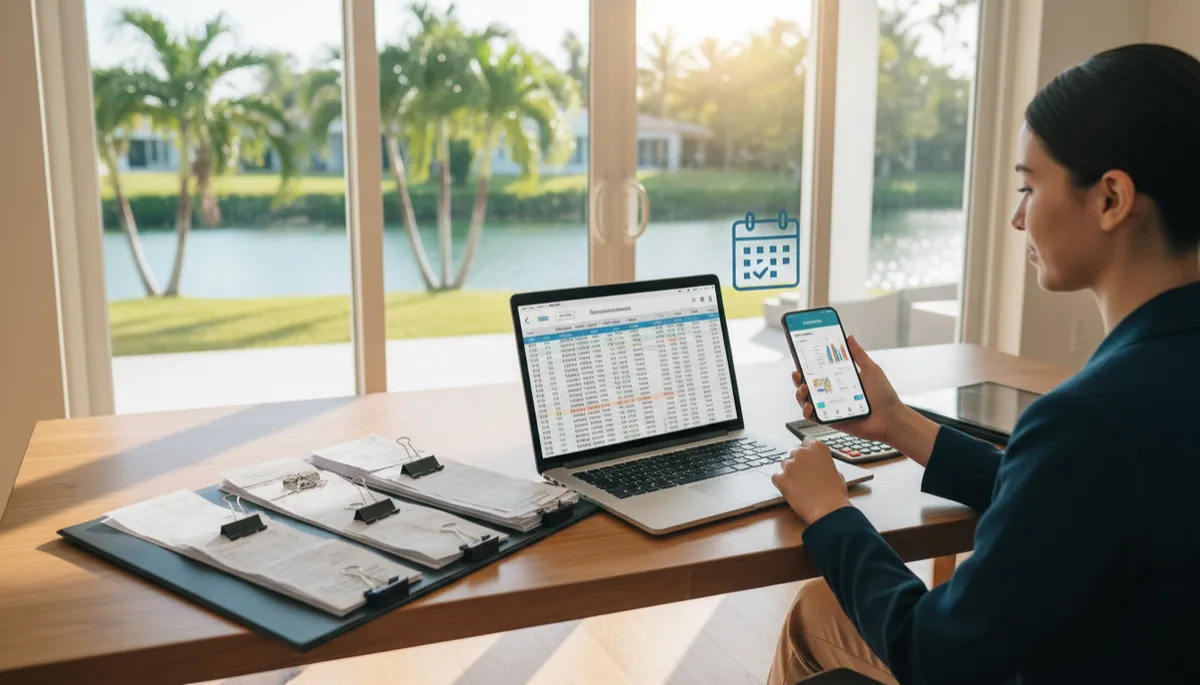
When you work for yourself, you are taxed on your net profit — income minus deductible expenses. If you do not keep receipts and records, you effectively volunteer to pay tax on money you never really kept. In a high-cost region like South Florida, that can mean thousands of dollars lost each year.
The IRS expects you to substantiate your deductions. That means clear documentation: receipts, mileage logs, bank and credit card statements, and notes showing how each expense relates to your business. With disciplined tracking, everyday costs — from your internet bill to your car mileage — can legitimately reduce your taxable income.
“If it is ordinary and necessary for your work, and you can prove it, it may be deductible. The proof is where most self-employed people fall short.”
— Vivian Coleman, MSN, VF Family Tax Services, North Lauderdale
💡 Pro Tip: Not sure what counts as “ordinary and necessary”? Start with this guide on self-employed deductions you might be missing and highlight any that apply to your work.
Home Office Deduction: Your South Florida Workspace Can Work for You
Many freelancers in Miami, Fort Lauderdale, and West Palm Beach run their businesses from home. If you use a specific area of your home regularly and exclusively for business, you may qualify for the home office deduction. This can apply whether you rent a Brickell apartment or own a condo in Boca Raton.
You can use the simplified method (a set rate per square foot) or the actual expense method, which lets you deduct a portion of rent or mortgage interest, property taxes, utilities, and even homeowners’ insurance. To support this deduction, keep:
A simple sketch or measurement of your office square footage
Lease or mortgage statements and annual property tax bills
Monthly utility and internet invoices, saved in a dedicated folder
💡 Pro Tip: Take dated photos of your home office setup once a year. If the IRS ever asks, you will have visual proof that the space was used for business.
Mileage: Every Business Mile Around South Florida Adds Up
Driving to meet a client in Coral Gables, visiting a job site in Fort Lauderdale, or attending a networking event in Wynwood can all generate deductible mileage. You may deduct either the IRS standard mileage rate or actual vehicle expenses, but in both cases you must keep a contemporaneous log of business miles driven.
Practical tracking options include mileage-tracking apps that run in the background on your phone, or a simple spreadsheet where you record the date, destination, purpose, and miles. Do not forget tolls and parking fees, which are also deductible when tied to business trips — especially important in a region with frequent toll roads and paid parking garages.
Start-of-year odometer photo: Snap a picture of your dashboard on January 1 and again at year-end.
Standard template: Use columns for date, start/end location, purpose, and miles driven.
📌 Key Takeaway: A mileage log does not need to be fancy — it just needs to be consistent and created close in time to each trip.
Business Meals: Document the Who, Where, and Why
Coffee with a client in downtown Miami or lunch with a prospective partner in Delray Beach can qualify as a business meal deduction when there is a clear business purpose. Typically, you can deduct a portion of the cost of food and beverages when you are present and the discussion is business-related.
To protect this deduction, keep the itemized receipt and quickly write on it (or in your app) the names of the people attending and the business reason for the meeting. Avoid rounding or estimating; the IRS prefers exact amounts supported by receipts, especially for meals and entertainment-related expenses.
Who: List each person at the table with a business connection.
Where: Note the restaurant or café and city.
Why: Briefly describe the business purpose (“project proposal review,” “quarterly strategy check-in,” etc.).
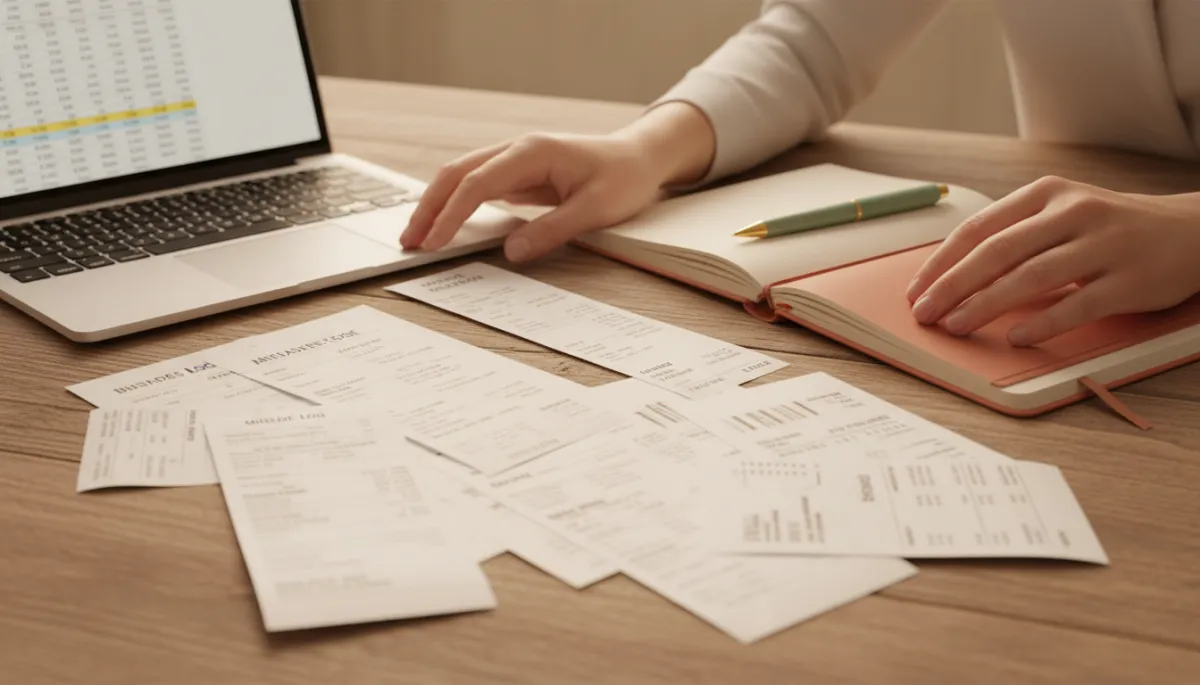
Organized receipts and notes turn everyday costs into fully documented deductions.
Equipment and Subscriptions: The Tools That Run Your Business
Laptops, cameras, phones, printers, and specialized tools you use in your trade are generally deductible as business equipment. Depending on the cost and how long the item is expected to last, you may be able to deduct the full amount in the year of purchase or depreciate it over time. Keep purchase receipts, warranty documents, and any financing agreements together for each major asset.
Do not overlook subscriptions. Software like design suites, project management tools, bookkeeping apps, cloud storage, and industry-specific platforms are usually fully deductible if used for business. The same applies to professional memberships, online courses, and trade publications that keep your skills current in a competitive South Florida market.
💡 Pro Tip: When you buy a big-ticket item, immediately note whether it is 100% business or mixed personal/business use. Your preparer will need this percentage at tax time.
Health Insurance Premiums and Retirement Contributions
Many self-employed individuals purchase their own health insurance, often through the federal Marketplace or a private carrier. If you meet certain conditions, your health insurance premiums for medical, dental, and qualifying long-term care policies may be deductible as an adjustment to income, rather than as an itemized deduction. Save annual policy statements, monthly premium invoices, and proof of payment from your bank or credit card.
Retirement contributions are another powerful way to reduce taxes while building long-term security. Options such as a SEP IRA, Solo 401(k), or SIMPLE IRA allow you to contribute significantly more than a traditional IRA, especially when your business income grows. Keep statements from your financial institution, records of each contribution, and plan documents so your tax preparer can calculate the maximum allowable deduction for the year.
Set a recurring calendar reminder near each quarterly deadline to review your income and adjust contributions.
Keep a simple spreadsheet summarizing date, amount, and type of contribution (employee vs. employer, if applicable).
Practical Systems for Tracking Expenses All Year Long
The most effective way to maximize deductions is to treat recordkeeping as a regular business habit, not a once-a-year scramble. Consider implementing the following systems:
Use a dedicated business bank account and card. Run all business income and expenses through one account to create a clean paper trail.
Adopt a receipt-capture app. Snap a photo of each receipt immediately; many apps categorize expenses and sync with accounting software.
Set a weekly “money hour.” Once a week, reconcile your bank feed, tag expenses, and update your mileage log so nothing goes missing.
Create simple folders. Keep digital or physical folders labeled “Home Office,” “Vehicle,” “Meals,” “Insurance,” and “Retirement” for faster review at tax time.
📌 Key Takeaway: A consistent, simple system you actually use is far more valuable than a complex system you abandon after two weeks.
How a Professional Tax Preparer Helps You Maximize Deductions
Tax rules for self-employed individuals are detailed and change regularly. A professional tax preparer who works extensively with South Florida freelancers and contractors can identify deductions you might miss and ensure that each one is properly documented and defensible in the event of an IRS inquiry.
A knowledgeable preparer will review your home office layout, evaluate whether the standard mileage rate or actual expenses are more advantageous, and confirm that your equipment purchases and subscriptions are classified correctly. They will also coordinate your health insurance and retirement contributions with your overall tax strategy, helping you decide how much to contribute and when, based on your income patterns across the year.
Perhaps most importantly, a professional can help you design a tracking system tailored to your business. That might mean recommending specific apps, setting up a basic bookkeeping platform, or creating a checklist you follow each month. With accurate records in place, your preparer can confidently claim every deduction you are entitled to, so you keep more of what you earn from your work in South Florida’s dynamic economy.
💡 Pro Tip: If you are transitioning from a traditional job to contract work, understanding W-2 vs 1099 differences will help you plan for taxes, deductions, and quarterly payments.
Final Thoughts: Treat Recordkeeping as an Investment, Not a Chore
Every receipt you track and every mile you log has the potential to reduce your tax bill. For self-employed professionals across South Florida, disciplined expense tracking is not just about compliance — it is about protecting your profits and creating financial stability in a region where costs can rise quickly.
By understanding deductions for your home office, mileage, business meals, equipment, subscriptions, health insurance premiums, and retirement contributions — and by partnering with a skilled tax preparer — you can approach tax season with confidence. Put simple systems in place now, and let every legitimate business receipt work for you, not against you.
📌 Key Takeaway: Staying ahead on quarterly payments matters too. If you expect to owe tax, review our guide on Prepare for Q3 Estimated Taxes in South Florida so your cash flow and deductions work together.
Ready to Turn Your Receipts into Real Tax Savings?
📞 Call to Action: Don't leave deductions on the table — book a free tax consultation today. A brief conversation with VF Family Tax Services in North Lauderdale can help you confirm what is deductible, tighten your tracking system, and plan ahead for the next filing season.
SEO Title: How to Track Tax Deductions as a Self-Employed Worker in South Florida
Meta Description: Learn how South Florida freelancers, contractors, and self-employed professionals can track receipts, mileage, home office, meals, equipment, subscriptions, health insurance, and retirement contributions, and work with VF Family Tax Services in North Lauderdale to legally reduce their tax bill.
Related Articles

 Vivian Coleman Published on: 17/08/2026


