Self-Employed Tax Deductions in Florida: What You Can (and Can’t) Write Off
You might love Florida’s sunshine and the fact that there’s no state income tax, but if you’re a freelancer, contractor, or sole proprietor in South Florida, the IRS can still take a big bite out of your income. The difference between a painful tax bill and keeping thousands of dollars in your pocket often comes down to one thing: are you claiming every deduction you’re entitled to?
This guide is written specifically for South Florida self-employed workers — from Miami creatives and Fort Lauderdale rideshare drivers to Broward County consultants and North Lauderdale home-based businesses. You’ll see real dollar examples, a complete list of common deductions, and simple, actionable steps to pay less tax legally.
Maximize Your Self-Employed Deductions in Florida
Keep more of what you earn with smart, year-round tax planning tailored to Florida’s self-employed.
Why Deductions Matter So Much When You’re Self-Employed
When you work for yourself, no one is withholding taxes from your paycheck. You’re responsible for income tax and self-employment tax (Social Security and Medicare). That can be a big bill — but deductions help shrink your taxable income, which means you pay less overall.
Consider a South Florida freelancer who nets $80,000 from their business:
With only $5,000 in deductions, they’re taxed on $75,000.
If they correctly track and claim $20,000 of legitimate expenses, they’re taxed on just $60,000.
At a combined federal and self-employment tax rate of around 25–30%, that extra $15,000 in deductions could save roughly $3,750–$4,500 in taxes.
Common Self-Employed Deductions You May Be Missing
While every business is different, most self-employed Floridians can take advantage of some or all of the following deductions on their federal tax return. The examples below are for illustration — your actual savings will depend on your income and tax bracket.
Home office expenses (if you use part of your home regularly and exclusively for business)
Example: You use a 150 sq. ft. room in your North Lauderdale apartment as your dedicated office in a 1,500 sq. ft. home — that’s 10% of your home. If your annual rent, utilities, and renter’s insurance total $30,000, you may be able to deduct around $3,000.
Business mileage or actual vehicle expenses when driving for work (not commuting)
Example: A Broward County contractor drives 10,000 business miles in a year. At a standard mileage rate of roughly $0.67 per mile, that’s a potential deduction of about $6,700.
Supplies and equipment like laptops, software, subscriptions, tools, and materials
Example: A Miami graphic designer buys a new laptop for $1,800, design software for $600, and a color printer for $400. That’s $2,800 in potential deductions, often in the first year under Section 179 or bonus depreciation rules.
Phone and internet used for business (portion or percentage)
Example: Your combined phone and internet bills are $250 per month. If you use them about 70% for business, you might deduct around $175 per month, or $2,100 per year.
Health insurance premiums (in many cases, if you’re self-employed and not eligible for employer coverage)
Example: A self-employed Fort Lauderdale consultant pays $550 per month for individual health insurance. Over a year, that’s $6,600 that may be deductible, subject to IRS rules.
Retirement contributions to SEP IRA, Solo 401(k), or SIMPLE IRA plans
Example: A self-employed Broward County professional contributes $10,000 to a SEP IRA. That’s a $10,000 deduction and money invested for their future.
Professional fees and education — CPAs, tax prep, legal fees, courses, and certifications related to your business
Example: You pay $750 for tax preparation and $500 for an online course to improve your business skills. That’s $1,250 of potentially deductible expenses.
Marketing and advertising — websites, social media ads, printed materials, branding
Example: A South Florida real estate photographer spends $3,000 on a website redesign, online ads, and branded materials. Those costs are typically deductible.
Business insurance — liability, professional, or equipment coverage
Example: You pay $900 per year for general liability insurance for your home-based business. That premium is generally deductible.
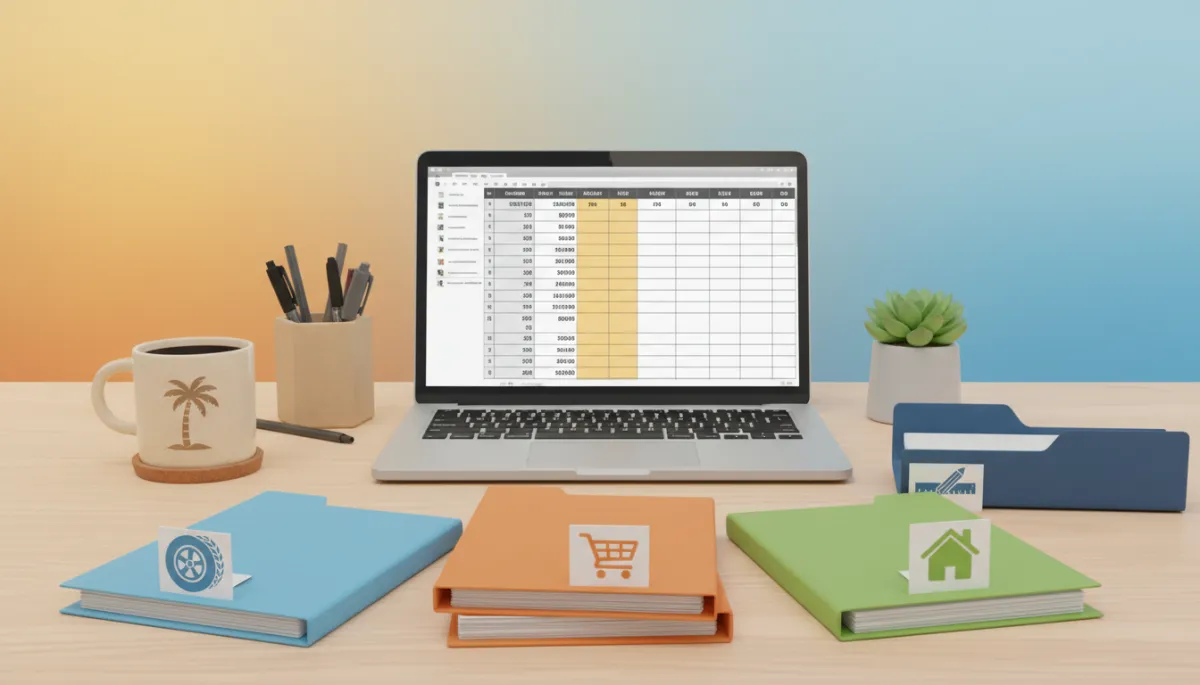
Organized categories like mileage, receipts, and supplies turn everyday costs into tax savings.
Florida-Specific Considerations for the Self-Employed
Florida doesn’t tax personal income, but you still need to pay attention to:
Federal income and self-employment tax — where all these deductions apply
Sales tax if you sell taxable goods or certain services in Florida
Local business taxes (sometimes called occupational licenses) depending on your city or county
What You Can’t Deduct as a Self-Employed Floridian
Not every expense is deductible just because you’re self-employed. The IRS requires that expenses be ordinary and necessary for your trade or business. Common non-deductible items include:
Personal living expenses (rent, groceries, clothing that’s not protective or uniform)
Fines and penalties (like parking tickets)
Political contributions and most lobbying expenses
“If you have to stretch to explain why an expense is related to your business, the IRS probably won’t buy it.”
— Experienced Tax Professional
Good Records: Your Best Defense (and the Key to Bigger Deductions)
The IRS doesn’t just care what you claim — they care whether you can prove it. That’s why keeping clear, organized records is one of the most powerful habits a self-employed person can build.
Save receipts, track mileage, and separate your business and personal finances as much as possible. When it’s time to file — or if you’re ever audited — you’ll be glad you did.
Simple, Actionable Steps to Lower Your Self-Employed Tax Bill
To make this practical, here’s a straightforward plan you can start using this week:
Open or confirm a separate business bank account. Run all income and expenses through it so you’re not digging through personal transactions at tax time.
Start tracking mileage immediately. Use a notebook in your car or a mileage app to log date, purpose, and miles driven for business.
Review your recurring subscriptions. List all software, apps, and services you use for business — many are deductible and often overlooked.
Set aside money for quarterly taxes. A common rule of thumb is to save 20–30% of your net income in a separate savings account for estimated payments.
Schedule a check-in with a tax professional. A short conversation can reveal deductions and strategies you’re missing.
W‑2 vs 1099: Why It Matters for Your Deductions
Many South Florida workers juggle both traditional jobs and side gigs. If you receive a W‑2, you’re treated as an employee. If you receive a 1099, you’re treated as self-employed for that income — and that’s where most of these deductions come into play.
Understanding the difference helps you avoid surprises and plan better for taxes. To dive deeper into this topic, read our guide on W-2 vs 1099 differences so you know exactly how each type of income affects your deductions.
South Florida Self-Employed: You Don’t Have to Figure This Out Alone
Scene of a South Florida freelancer meeting with a tax in a cozy North Lauderdale office,... Local guidance turns confusing tax rules into a clear year-round plan.
When to Get Professional Help
If your income is growing, you’ve started hiring help, or you’re unsure whether you’re taking all the deductions you’re entitled to, it may be time to talk to a tax professional who understands self-employed taxpayers in Florida — and specifically, South Florida.
The right guidance can help you:
Choose the best business structure for tax purposes
Plan for quarterly estimated taxes so you’re not surprised in April
Maximize deductions while staying compliant with IRS rules
Learn More About Tracking Deductions and Estimated Taxes
If you’re ready to get more organized and proactive with your tax planning, check out our guide on how to track your self-employed deductions for practical ways to stay on top of receipts, mileage, and business expenses all year long.
Take the Next Step Toward Lower Self-Employed Taxes
Overhead view of a terracotta notebook, sage green pen, calculator, and tax documents on a light... A few organized tools and the right advisor can transform your tax season.
VF Family Tax Services, run by Vivian Coleman, MSN in North Lauderdale, focuses on helping South Florida freelancers, contractors, and small business owners feel confident about their taxes. A short conversation with a knowledgeable tax professional can reveal deductions you’ve been missing, help you clean up your records, and give you a clear plan for the rest of the year — so you can focus more on growing your business and less on worrying about taxes.
Vivian Coleman is a South Florida tax professional and founder of We Are Family Tax Services, helping individuals, families, and self-employed clients file with confidence and keep more of what they earn.
 Vivian Coleman Published on: 17/08/2026