Fall Tax Planning: 5 Smart Year-End Moves for South Florida Residents
As the temperatures finally dip a few degrees in South Florida and hurricane season winds down, the financial forecast for your tax year is coming into clear view. By fall, most of your income, deductions, and investment activity are already on the books—making this the ideal moment to take proactive, targeted steps that can lower your April tax bill, improve cash flow, and strengthen your family’s long-term financial plan.
Instead of waiting until spring and simply reacting to the numbers on your return, you can use the coming weeks to make five practical, high-impact moves before December 31. These strategies are especially relevant for South Florida households with variable income, multiple properties, or growing investment portfolios—and they are designed to be both realistic and actionable.
Custom HTML/CSS/JAVASCRIPT
📌 Key Insight: Most of the best tax strategies only work if you act before December 31. The earlier in the fall you review your situation, the more options you have.
1. Review Your Tax Withholdings Before It Is Too Late
Your paycheck withholdings are the foundation of your tax outcome. If too little is withheld, you may face an unexpected balance due and possible penalties. If too much is withheld, you are essentially giving the IRS an interest-free loan all year. Fall is the right time to verify that your current withholdings align with your actual income and tax situation for the year.
Start by gathering your most recent pay stubs and your last filed tax return. Use the IRS Tax Withholding Estimator or a similar tool to project your current-year tax liability based on what you have earned so far and what you expect to earn through December. If you or your spouse changed jobs, received a large bonus, picked up side income, or had periods of unemployment, your original Form W-4 may no longer be accurate. This is especially common for South Florida families with variable income from commissions, hospitality work, real estate, or seasonal businesses.
Check for under-withholding: If the estimator shows a shortfall, consider submitting an updated W-4 to your employer asking for additional withholding each pay period for the rest of the year.
Identify over-withholding: If it shows a significant overpayment, you may be able to reduce withholdings for the remaining paychecks, improving your cash flow without jeopardizing your refund or creating a balance due.
💡 Pro Tip: If you also make quarterly estimated payments—common for self-employed professionals, real estate agents, and investors—review your quarterly estimated tax deadlines to be sure you are on track and not duplicating payments through both withholding and estimates.
2. Maximize Retirement Contributions to 401(k)s and IRAs
Boosting retirement contributions is one of the most effective ways to lower your current tax bill while building long-term security. For employer-sponsored plans such as 401(k)s, 403(b)s, and most 457 plans, contributions must generally be made by December 31 to count for the current tax year. Traditional contributions reduce your taxable income, while Roth contributions may not be deductible but can grow tax-free for the future.
Review how much you have contributed so far this year and compare it to the annual IRS limits for your age group. If you are behind, ask your HR department or plan administrator how to temporarily increase your contribution percentage for the remaining pay periods. Even a modest increase between now and year-end can produce meaningful tax savings, particularly for households in higher federal tax brackets. South Florida professionals who receive year-end bonuses may want to direct a portion of that bonus straight into their retirement plan to maximize the deduction and avoid lifestyle creep.
Prioritize employer matches: Make sure you are at least contributing enough to capture the full company match—otherwise, you are leaving free money on the table.
Use catch-up contributions: If you are age 50 or older, explore whether catch-up contributions can accelerate both your savings and your deductions.
Individual Retirement Accounts (IRAs) also deserve attention. While you technically have until the tax filing deadline next spring to fund an IRA, planning in the fall helps you avoid scrambling later. Determine whether a traditional or Roth IRA makes more sense based on your income, filing status, and long-term goals. If you are self-employed in South Florida—whether running a small business in Miami, working as a contractor in Fort Lauderdale, or serving clients in the Keys—explore options like a SEP IRA or Solo 401(k), which may allow larger contributions and bigger deductions than a traditional IRA alone.
📌 Key Takeaway: Retirement contributions are one of the few levers you can still pull late in the year to meaningfully reduce taxable income while strengthening your future.
3. Harvest Investment Losses to Offset Gains
Market volatility is a reality for investors, and many portfolios contain both winners and underperformers. Tax-loss harvesting is the process of intentionally realizing capital losses by selling investments that have declined in value, then using those losses to offset realized capital gains and, in some cases, ordinary income. Done thoughtfully before year-end, this strategy can significantly reduce your overall tax burden without changing your long-term asset allocation.
Begin by reviewing your taxable investment accounts—brokerage accounts, not retirement accounts like 401(k)s or IRAs. Identify positions that are trading below your purchase price and consider whether they still fit your long-term plan. If not, selling them can generate a realized loss that can offset gains you may have taken earlier in the year, such as selling appreciated stock, a rental property, or a business interest. After offsetting all capital gains, up to a set amount of remaining losses may also be used to reduce ordinary income each year, with additional losses carried forward to future years.
Watch the wash-sale rule: The IRS disallows a loss if you buy the same or a “substantially identical” security within 30 days before or after the sale.
Maintain market exposure: Instead of rebuying the same security, consider a similar—but not identical—investment to stay invested while respecting the rules.
For South Florida investors with concentrated positions in local industries such as real estate, tourism, or healthcare, coordinating tax-loss harvesting with broader diversification goals can be particularly valuable. This is an area where personalized guidance can help you avoid costly missteps.
Coordinating investment decisions with tax strategy can help preserve more of your long-term returns.
4. Make Strategic Charitable Contributions
Year-end giving is a tradition for many South Florida families, and it can also be a powerful tax planning tool when structured carefully. Charitable contributions made by December 31 may be deductible if you itemize deductions on your federal return. Even if you do not itemize every year, it may be advantageous to “bunch” several years of donations into one tax year to exceed the standard deduction and capture a larger benefit.
Consider the form of your donations as well as the amount. Donating appreciated securities—such as stock or mutual fund shares held for more than one year—can be more tax-efficient than giving cash. When you transfer the shares directly to a qualified charity, you may be able to deduct the full fair market value while avoiding capital gains tax on the appreciation. This approach can be especially attractive after years of strong market performance in certain sectors common in South Florida portfolios, such as real estate investment trusts or hospitality-related companies.
If you are charitably inclined and want to plan beyond a single year, explore using a donor-advised fund. You can make a large, potentially deductible contribution to the fund this year—using cash or appreciated assets—and then recommend grants to your favorite South Florida and national charities over time. This structure provides flexibility and simplifies recordkeeping while allowing you to align tax benefits with high-income years or major liquidity events.
💡 Pro Tip: Keep detailed receipts and acknowledgement letters from charities now, rather than trying to track them down during tax season. Accurate records make it much easier for your tax preparer to maximize your deduction.
5. Schedule a Year-End Tax Review with a Professional
Tax laws evolve, personal circumstances change, and South Florida’s unique economic environment—ranging from hurricane risks to real estate dynamics—can create planning opportunities and pitfalls that are not obvious from generic advice. A year-end meeting with a qualified tax professional can help you identify strategies tailored to your family’s specific situation before the window closes on December 31.
During this review, be prepared to discuss your income sources, major life changes (such as marriage, divorce, a new child, or retirement), investment activity, real estate transactions, and any business interests. A professional can evaluate whether you are on track with estimated payments, whether additional retirement contributions or charitable gifts make sense, and how potential moves—such as selling a property or exercising stock options—will affect your tax liability. For retirees in South Florida, this is also an excellent time to review required minimum distributions and consider strategies like qualified charitable distributions from IRAs, where applicable.
Because many firms become extremely busy in January and February, booking a fall appointment ensures you have time to implement recommended changes. It also allows your advisor to coordinate with your financial planner or investment professional so that your tax strategy, investment plan, and estate plan all work together. This integrated approach is particularly valuable for families with multiple properties, business interests, or multi-generational planning goals in South Florida.
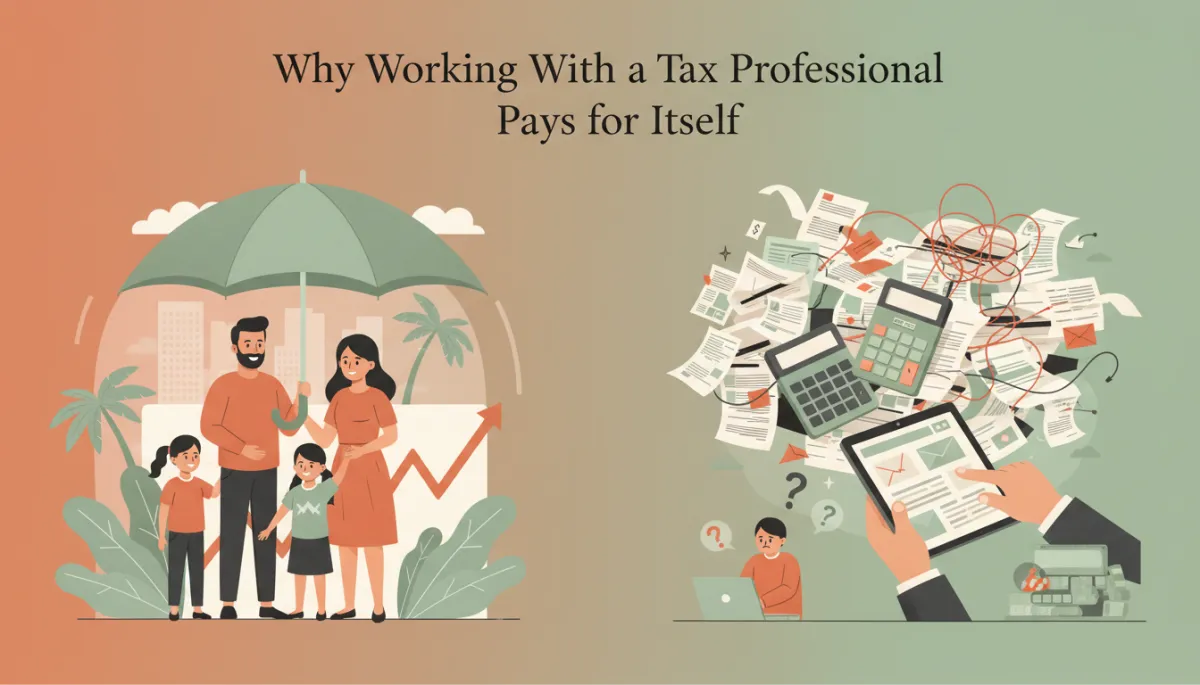
📌 Key Takeaway: For many households, the difference between “filing taxes” and planning taxes comes down to working with a local tax professional who understands Florida’s landscape and your family’s goals.
Scene of a North Lauderdale tax meeting with a young South Florida family at a desk, open...
Bringing Your Year-End Tax Strategy Together
Effective fall tax planning does not require complex maneuvers; it requires timely, deliberate action. By reviewing your withholdings, maximizing retirement contributions, harvesting investment losses, structuring charitable giving thoughtfully, and engaging a tax professional before year-end, you can influence your tax outcome rather than simply reacting to it in the spring. For South Florida individuals and families, these steps can help you navigate a dynamic economic landscape with greater confidence and control.
The most important move is the one you make now. Choose one or two of these strategies to address this week, set specific deadlines for yourself, and follow through before December 31. Thoughtful planning in the fall can turn tax season from a source of stress into an opportunity to reinforce your family’s financial foundation for the years ahead.
Close-up of hands holding a terracotta coffee mug next to neatly stacked tax documents and a...
📌 Key Takeaway: If you want deeper guidance on whether to DIY or partner with an expert, explore the Benefits of Hiring a Tax Professional in Florida to see how professional advice can fit into your overall plan.
💡 Pro Tip: If you are self-employed or run a small business, strong recordkeeping now can make next spring far easier. Use these practical ideas from Track Deductions: Self-Employed Tax Tips to organize your income and expenses before year-end.
Vivian Coleman is a South Florida tax professional and founder of We Are Family Tax Services, helping individuals, families, and self-employed clients file with confidence and keep more of what they earn.
 Vivian Coleman Published on: 17/08/2026